ARCHIVES
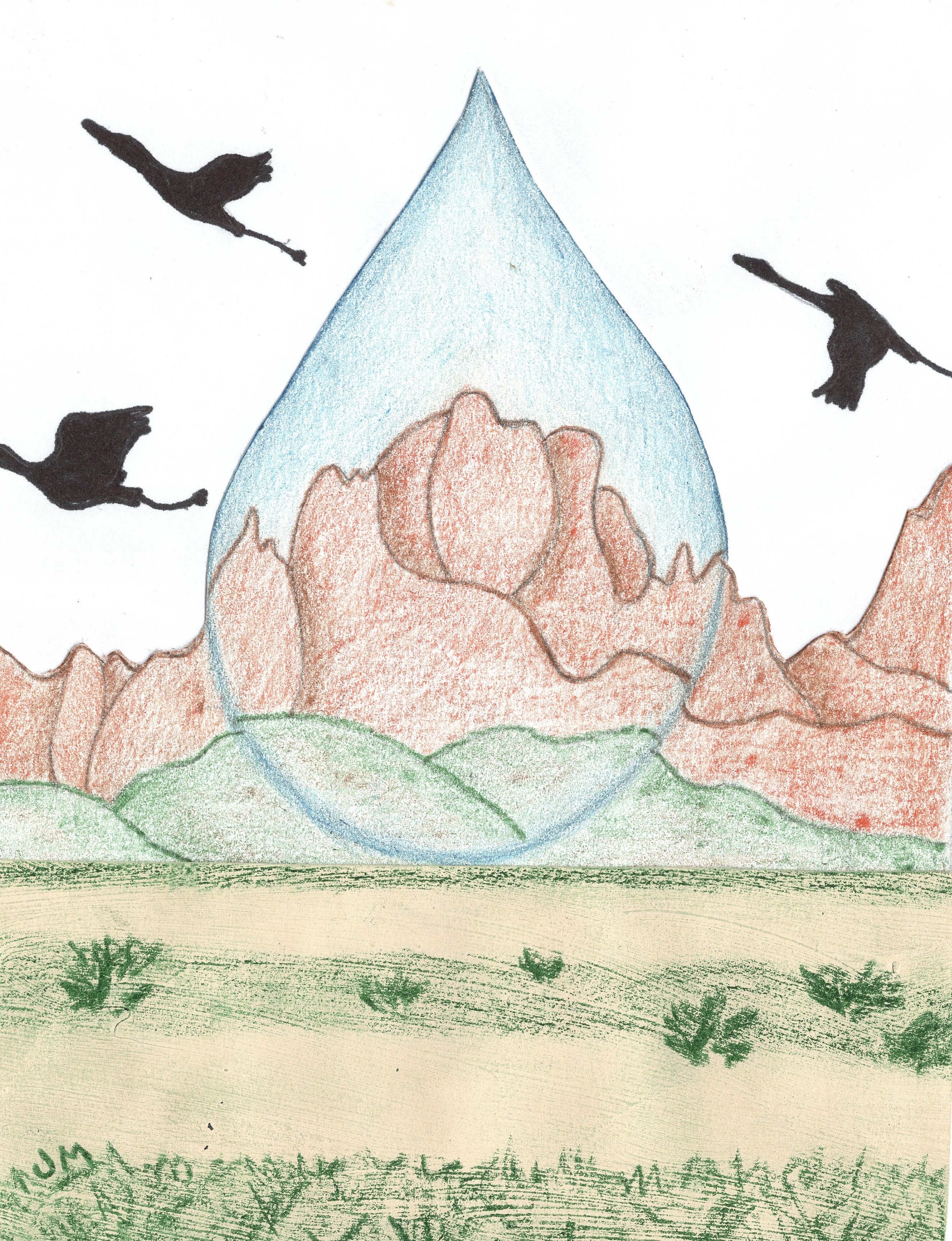
People for the Playa Water Resources, Inc. is a Arizona Nonprofit Corporation that as part of its charitable and educational mission is opposed to the creation of a lithium mine in the Willcox Playa in Cochise County, Arizona. Our opposition is due to:
(1) The negative impact the lithium mine will have on the pristine beauty of the area;
(2) The destruction of a recognized sandhill crane habitat; and
(3) The irreversible spoilage of the groundwater resource.
FAQs about the Willcox Playa
Why is the Willcox Playa Worth Protecting?
The Willcox Playa is the largest “dry lake” in Arizona, a remnant of the ancient Lake Cochise. It is 2,369 acres of federally owned land and is a night-time roosting area for 4,000-8,000 sandhill cranes. It was named a National Natural Landmark in 1966 due to its rich fossil record.

Why Mine for Lithium in the Willcox Playa?
Lithium is a chemical element and key component of smartphone and electric vehicle (“EV”) batteries. As a result, lithium is quickly becoming the most valuable commodity on Earth. Lithium is also infinitely recyclable without performance loss. Despite its recyclability, Federal officials are investing billions of dollars to increase domestic mining for lithium, with the goal to decrease reliance on foreign countries.
Is There Lithium in the Willcox Playa?
In 1976, the United States Geological Survey (“USGS”) identified the Willcox Playa as potentially one of the most prospective locations for lithium brines in the country. Despite never stepping onto the Playa, the USGS identified what it described as “a 22-square mile anomaly with high electrical conductivity, interpreted as subsurface brine field with no hydrological outlet.”
MAX Power Mining Corp., a Canadian company, entered into a purchase and sale agreement in April 2023 for 100% of three mineral exploration permits (on state land). MAX Power also purchased three mineral exploration permits totaling 1,435 acres, and in two other areas, the company secured three mineral exploration permits (on state land) in the eastern Playa and 82 Bureau of Land Management claims (totaling 2,320 acres) in the southern and northwestern part of the Willcox Playa. In November 2023, Max Power announced that it has received a permit from the Arizona State Land Department (“ASLD”) to carry out diamond drilling on the Willcox Playa Property.
What are the Concerns with Lithium Mining?
Lithium extraction poses a significant threat to water resources and wetlands, primarily because lithium mining is mostly carried out via lithium brine extraction and then deposited into evaporation pools. The resulting concentrate is then removed for processing into lithium carbonate. Each ton of lithium requires around two million liters of waterto be evaporated, resulting in enormous quantities of water being lost every year and putting underground freshwater reserves in danger of salinization by getting in contact with brine. Therefore, evaporation-based lithium brine mining methods are unsustainable.
In addition, lithium mining:
- (1) Releases harmful emissions, including carbon dioxide;
- (2) Pollutes water sources with chemicals used to complete the extraction process;
- (3) Produces large-scale mining chemical byproduct waste; and
- (4) Wastes millions of gallons of water thatis rarely, if ever, reused and decreases the amount of water available to local agriculture farms.
In January 2024, an investigation from the Howard Center at Arizona State University found that the coming electric battery revolution in America will require billions upon billions of gallons of water to mine lithium. Many of the new U.S. mines will be located in the drought-prone American West.
How Does MAX Power Intend to Mine for Lithium in the Willcox Playa?
MAX Power has entered into a cooperative research and development agreement with the University of California Lawrence Berkeley National Laboratory to develop state-of-the-art direct lithium extraction technologies for brine resources.
As detailed in the following chart, this new technology is not only water intensive, but the technology is in the early stages of development.

 People for the Playa Water Resources